If you have ever managed numerous references while making arguments in research papers, you have already engaged in writing synthesis essays. These assignments require you to absorb, connect with, and react to diverse ideas. They also extend beyond simple summarization by incorporating various sources that reinforce your own viewpoint on a subject.
Whether you are composing in an English course or preparing for the AP exam, synthesis essays might seem daunting. However, this guide will assist you in crafting plagiarism-free synthesis essays clearly, alongside a structured approach to boost your confidence. Don’t worry.
What Constitutes a Synthesis Essay?
A synthesis essay is a writing form that merges information from various sources to formulate an argument or explanation. Your task involves analyzing each source and merging their insights into a cohesive viewpoint rather than merely summarizing them.
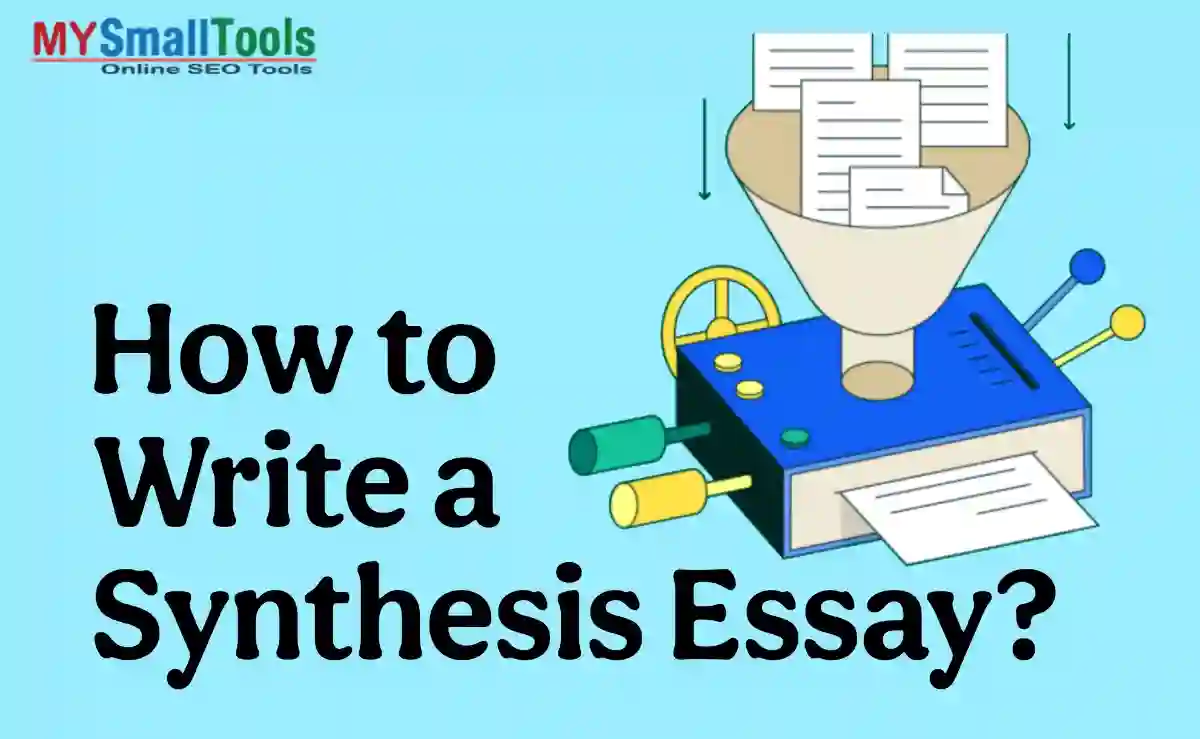
Consider each source as an ingredient when cooking; your role is to mix them into a well-prepared dish that represents your unique taste (your argument).
- Explanatory synthesis aids the reader in grasping a subject. This type elaborates on the primary points of each source, illustrating their connections.
- Argumentative synthesis: In this instance, you advocate for a position on a matter, utilizing evidence from your sources to bolster your perspective.
The second category largely comprises college tasks, particularly persuasive or research-focused essays that you produce.
How To Compose an Effective Synthesis Essay
An effective synthesis essay does more than enumerate others’ viewpoints. It illustrates the connections between those ideas, identifying areas of agreement or disagreement, and clarifies your perspective within that discourse. Follow these steps to compose a strong synthesis essay:
Also Read


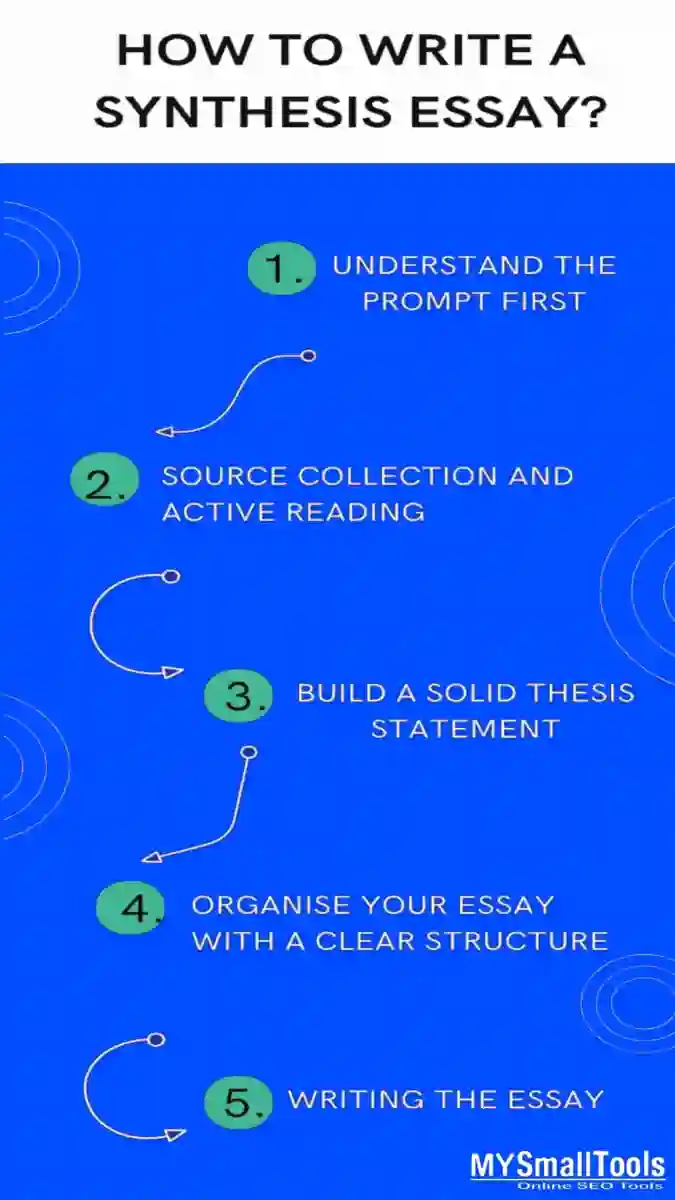
Comprehend the Assignment
Before proceeding, ensure you fully understand what is required. Are you tasked with advocating a viewpoint? Summarizing a discussion? Clarifying a problem? Grasping the type of synthesis essay will influence your entire methodology.
Select (or Examine) Your Topic
If a topic is assigned, begin by pinpointing its essential questions or controversies. If you have the option to choose, select a subject with multiple perspectives or available sources—common selections include social matters, scientific discussions, or literary themes.
Collect Your Sources
You’ll require a minimum of two or three reliable sources, although many tasks may call for additional ones. Seek academic articles, books, expert insights, or trustworthy news sources. As you read, underline significant quotes, statistics, and arguments that support or counter various aspects of the issue.
Tip: Organize your notes in a chart or table that categorizes the sources by perspective, theme, or argument. This will assist when arranging your essay.
Develop Your Thesis
After reviewing your sources, it’s time to take a firm position. Your thesis should indicate your viewpoint on the topic and suggest how the sources substantiate that position.
Here’s a brief example:
While renewable energy plays a crucial role in fighting climate change, it is essential for governments to confront its uneven accessibility to guarantee fair and efficient execution.
This thesis not only asserts a truth but also conveys an argument that the remainder of the essay will support through a blend of various references.
Guide to Crafting a Thesis for a Synthesis Essay
Let’s explore the process of creating a thesis, as it serves as the foundation of your synthesis essay.
Be precise and unequivocal.
The statements from references are not your sole focus, but you should interpret them in light of your perspective.
Following that, your body paragraphs should align with this outline.
“Social media encompasses diverse perspectives. ”
“Studies indicate that the outcomes are influenced more by how it is used and individual circumstances rather than the platforms themselves, although some critics claim that social media negatively impacts adolescent mental health. ”
After composing your thesis, provide a brief summary of the primary points that will bolster your argument. The body paragraphs will represent your ideas. These are the elements that define them.
Guide to Structuring a Synthesis Essay
A strong framework will maintain the concentration and coherence of your synthesis essay. Here’s a straightforward outline to adhere to:
Introduction
- Begin with an engaging opening (an unexpected fact, a quote, or a question).
- Offer some context regarding the subject.
- Conclude with your thesis statement.
Body Paragraphs (Typically 3–4)
- Every paragraph must:
- Concentrate on a single crucial idea or argument.
- Incorporate evidence from various sources.
Examine how the sources connect with one another and relate to your standpoint.
Don’t merely quote sources—discuss their interrelations. Are they conveying similar messages in different terms? Do they contradict each other? Does one provide a solution that another overlooks?
Utilize transitions like:
- In comparison. . .
- Likewise. . .
- Although Source A asserts X, Source B highlights Y. . .
Counterargument Paragraph (Optional but advised)
Demonstrate that you have taken opposing perspectives into account. Briefly outline the counterargument and then contradict it with supporting evidence.
Conclusion
Conclude by reiterating your thesis and major points. Leave your audience with something to ponder—a final thought, question, or implication stemming from your argument.
Guide to Writing a Conclusion for a Synthesis Essay
While it may be tempting to simply restate your thesis and conclude, crafting a conclusion for a synthesis essay requires a bit more skill. An effective conclusion should:
- Rephrase your thesis with different wording—not copy it verbatim.
- Summarize essential arguments from the essay body without merely listing them.
- Emphasize the wider relevance of your argument. What insights should the audience derive? Why is this subject important?
For Example:
In conclusion, although renewable energy offers an encouraging approach to achieving a cleaner future, lack of equitable access poses a significant challenge. Unless lawmakers make affordability and infrastructure a priority, many communities will continue to miss out on the advantages of green energy. Only through addressing both innovation and inclusivity can we ensure substantial environmental advancement.
Avoid presenting new arguments in this section—focus on reinforcing your previous points while leaving a memorable impact.
Final Suggestions for Composing a Synthesis Essay
- Employ phrases like “According to. . . ”, “As highlighted by. . . ”, or “In contrast with. . . ” when introducing sources.
- Ensure proper citation (APA, MLA, or guidelines set by your instructor). Even unintentional plagiarism can damage your reputation and academic performance.
- Edit and improve. Check for logical coherence, grammatical mistakes, and unclear connections.
- Utilize a plagiarism checker such as MySmallTools to ensure your rewording and references are accurate before turning in your work.
Common Mistakes to Avoid
- Citing sources without offering analysis. Synthesis involves linking ideas rather than just summarizing.
- Presenting an ambiguous thesis. Clearly define your position.
- Relying on a single source in each paragraph. Your argument should reflect the interplay of various concepts.
- Disregarding opposing viewpoints. Recognizing alternative perspectives adds depth and fairness.
- Neglecting the reason behind your argument. Clarify why your viewpoint is significant within a broader framework.
Concluding Remarks: Excelling in the Synthesis Essay
At this point, you should have greater assurance about composing a synthesis essay from beginning to end. It’s not merely about accumulating quotations; it’s about weaving a dialogue among concepts and guiding it toward your viewpoint.
So, when you encounter a pile of articles and an empty page, keep in mind: you’re engaging in construction—not just summarizing—but connecting sources to your own thoughts.
With dedication, effort, and a well-defined thesis, your synthesis essay can transform from disorganized notes into an engaging and insightful piece of writing.
